


Read more
Blog, Blog Posts
Conditions for migrants in Europe: what does irregularity have to do with it?
A recent Yougov poll found that attitudes towards incoming migrants are hardening in Europe. Legal status is at the heart of the debate, with the strongest opposition being towards migrants who are described as irregular....
Across the diverse socio-economic landscapes of Austria, Italy, Poland, Sweden, and the UK, a common and troubling reality persists: the functioning of the agriculture, elder care, restaurant, and waste management sectors relies, among others, upon a workforce of irregularised migrants who face a structural continuum of exploitation. As findings from the project Protecting Irregular Migrants in Europe (PRIME) demonstrate, low-skilled positions in these sectors of work (so-called 3D jobs that are dirty, dangerous and demanding) remain highly dependent on an irregularised workforce that is flexible, low cost, and easily replaceable. Our recent study, based on over 200 interviews with migrants living in these five countries and working in these sectors, reveals that regardless of national labour market regulations, welfare systems or social care models, irregularised workers are present, working, and trapped in a cycle of wage theft, excessive hours, and hazardous conditions. Across all five countries, anti-migrant political shifts have created hostile environments where enforcement priorities both enable and rely upon exploitative intermediaries who operate with limited institutional oversight. These intermediaries range from institutional transnational brokers, through to national work agencies, to informal contacts in communities where irregularised migrants seek work opportunities.
Disposable labour: Irregularised migrants in European workplaces
Throughout the countries of this research, we observed similar working conditions among irregularised migrants. The sectors examined in our research are united by physically demanding labour and material unpleasantness: harvesting fruit and vegetables in agriculture; cleaning animal carcasses at scale in food processing; sorting foul-smelling waste in recycling; managing bodies and intimate care among the elderly; and enduring the rapid, repetitive labour of restaurant kitchens. This is hard, physical work to begin with, but for irregularised migrant workers, it often becomes exploitative: already difficult conditions are compounded by an insecure legal status and limited access to other work opportunities.
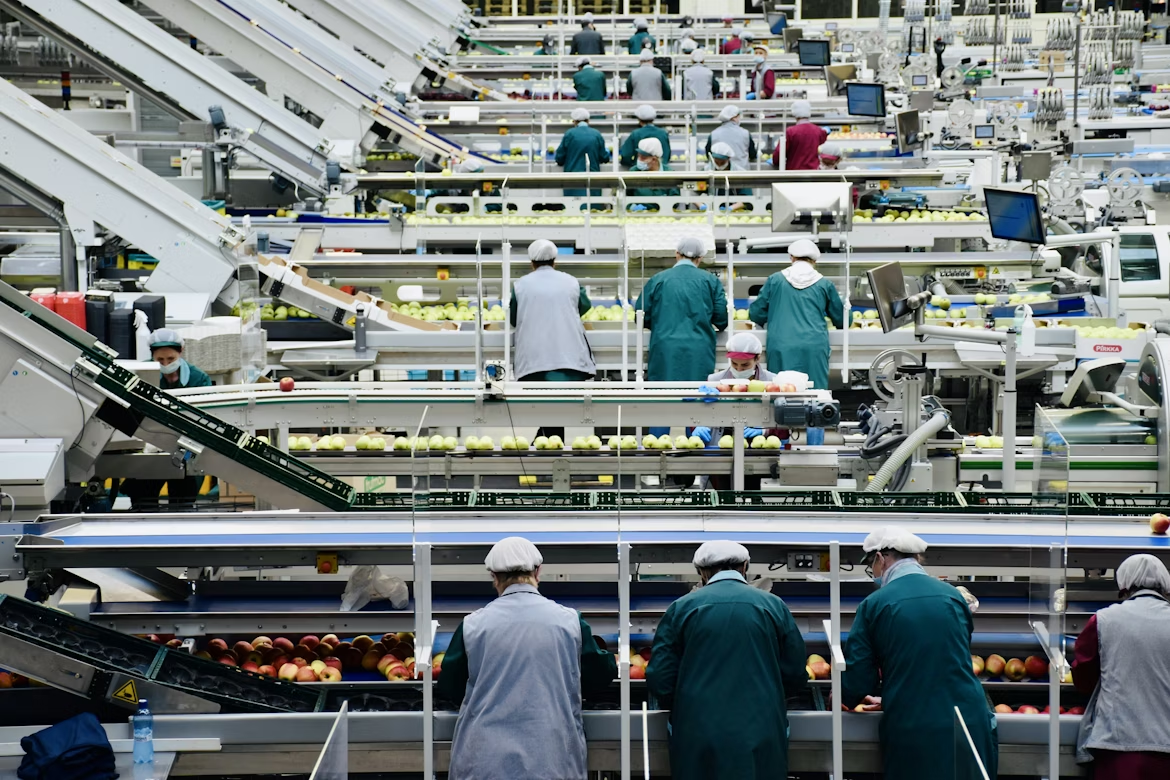
In the agriculture and food-processing sector, interviewees across countries reported intense physical demands, exposure to extreme weather, and hazardous environments without adequate safety measures. Interviewees reported experiences of intense racialisation, facing discrimination that led to significantly harsher treatment than co-workers who are citizens of the country in which they work. In this sector, employer-provided housing for irregularised migrant workers was often used as a means of coercion: refusing or failing to comply with work demands could lead not only to job loss, but also to immediate eviction.
In the restaurant sector, irregularised migrant workers routinely reported working excessively long hours, on an ‘on call’ basis, depending on the needs of the restaurant. Interviewees were consistently underpaid for the number of hours worked, and were typically paid in cash. They were generally hidden from view in restaurants, relegated to the back-of-house roles of dishwashing and cleaning. Protective equipment was rarely distributed, safety procedures were not explained, and access to healthcare in the event of injury or illness was often absent.
We studied different aspects of the elder care sector, including formalised institutional or in-home care systems (Austria, Sweden and the UK) to informal family-based care (Italy and Poland). In most study countries, irregularised migrants predominantly worked in domestic and often live-in care settings where they were exposed to multiple risks, including isolation, verbal and sexual harassment, and the expectation to be available 24/7. Wage theft and unexplained pay deductions were widely reported, and interviewees working in family-based care settings invoked the terms ‘servant’ and ‘slave’ to describe their working conditions.
Work in the waste management and recycling sector for irregularised migrants was primarily ad-hoc, without regular hours or payment. Among those working in waste management plants, this included shifts of up to 11 hours of standing and lifting in foul-smelling and noisy environments. The sector offered no possibilities for irregularised migrants to have a regular or stable form of income.
Access to work and the ‘disappearing’ employer
Across all sectors in all of our countries of research, there is a pervasive presence of dishonest intermediaries, who are one of the primary sources of misinformation and scams. For instance, these actors often provide fraudulent contracts or charge exorbitant fees for documents that never materialise. Agencies, subcontractors, and informal brokers can control job access, pay, housing, and migration paperwork. One consequence is that, in the eyes of the worker, the employer can effectively disappear. Alejandro, a Colombian working in the food processing sector in Poland shared his confusion over who he was dealing with at work:
The problem was that I don’t know if the person that hired us was with an agency, or if it was just an intermediary person. We never knew…one day they asked us for a passport that supposedly was needed to acquire the work permit…We never got the permit. We worked there for a month, a month and a week. We were paid fortnightly and the guy would take a long time to pay us…all this time we were left without money, without food, he didn’t care, we wrote to him, and he didn’t answer us. Until once the owner of the flat where we lived arrived and told us that we had to leave that same day because the person that hired us had not paid the rent.
Intermediaries don’t just broker work, but they broker responsibility away. Once diffused in this way, workers become more disposable and replaceable, without viable recourse to reparations. While the employer keeps a distance from their workers, they profit from cheap labour while offloading responsibilities for worker welfare into a chain of subcontractors.
Beyond survival: irregularised migrant workers envisioning change
Across sectors, irregularised migrants described an overwhelming inability to imagine the future, constrained by bureaucratic obstacles, insecure legal status, precarious employment, and relentless working days. There was no clear, linear trajectory toward regularisation or pathways to see their circumstances significantly improving. As an in-home care worker in Sweden put it: “It’s very little money…you don’t work, you try to survive.” Limited access to trade unions further restricted their ability to challenge abuse or negotiate better conditions.
Despite these realities, their proposals for change converged around three themes. First, they called for reducing precarity through broad regularisation programmes, simpler and more flexible permit systems, and the right to work during asylum procedures. Immigration regimes were criticised for prioritising surveillance over support and for imposing financial stability requirements that precarious conditions make impossible. Stronger legal status, they argued, must be matched by fair labour standards, equal treatment across nationalities, and recognition of those already working and contributing.
Second, irregularised migrant workers described being misinformed by a wide range of intermediaries often leading directly to exploitation at work. Interviewees called for stronger regulation of the many layers of labour intermediation, with accountability shared by sending and receiving states as well as by employers who benefit from these arrangements. They also stressed the importance of more accessible administrative services, including extended office hours and translation support, to enable them to seek accurate information without risking their jobs.
Third, they demanded reparations that hold illicit intermediaries and employers accountable without exposing workers to retaliation. This includes wage parity, liveable incomes, proactive labour inspections, and protections not dependent on workers denouncing abuse. They also urged a shift away from deterrence policies and toward disentangling legal status from, housing, and employer control.
What difference do diverse institutional contexts and migrant regularisation make?
Important recent legal and policy analysis has shown that there are significant cross-national differences in how governments limit or contain the labour and social rights of irregularised migrants. Indeed, one might reasonably anticipate better outcomes in coordinated welfare states such as Sweden or Austria compared to more liberal labour markets like the UK or Poland. Our qualitative data does not however reflect such differential treatment, and instead, we observed a striking convergence in the living and working conditions of irregularised migrants across national contexts.
Furthermore, while irregularised migrants in our study undoubtedly faced the most severe forms of exploitation, in the scope of our research, legal status offered no meaningful immunity from precarious and coercive working conditions. We included a control group of workers with both a regular and semi-regular migration status, recognising that in practice these categories are highly fluid, with many individuals moving in and out of irregularity over time. Yet, on the basis of our qualitative data, the differences across legal statuses were far less pronounced than expected. For example, even among workers with secure legal status, dependence on employers for residence permit renewal emerged as a central concern, discouraging the reporting of abuse and enabling documentation itself to function as a mechanism of control.
This suggests that broader structural forces are at play. Widespread pressures toward cost-cutting and labour flexibility, combined with the continued rise of right-wing anti-migrant sentiment across Europe, are reshaping working conditions, and undermining the effective realisation of workers’ rights. From our qualitative data, this is happening irrespective of national welfare or labour market models. At the same time, these dynamics are paving the way for illicit intermediaries to operate with increasing impunity, enabling what has been described elsewhere as the “legal production of illegality”. Illicit intermediaries do not operate in the absence of regulation but through its circumvention, using layered subcontracting chains to dodge accountability. Governments fail to intervene as employers and their intermediaries engage in exploitative practices in order to maintain cheap labour under the pressure of global competition. Meanwhile society at large continues to use the essential services that this system quietly sustains.
Access the full study ‘Comparing the working activities and conditions of irregularised migrants : evidence from Austria, Italy, Poland, Sweden and the UK’.