Public opinion on immigration is often assumed to be mercurial. Indeed, in Europe, by some metrics—such as whether there is too much immigration, or whether it is one of the most important issues— attitudes...
“They wanted to take my passport. I slept on my money and my passport. They didn’t want me to leave, because where would they find someone so stupid to work for 450 euros?”
This is the story of Anastasia, a Ukrainian woman in her early 40s, who came to the city of Naples (Italy) in 2019 to work as a caregiver for elderly people. Such stories, although they might sound extreme and even unrealistic, are very often the everyday reality of migrant women, live-in workers, employed in the domestic sector.
This blog post, based on field research conducted in the Campania region in 2024 as part of the Horizon Europe project I-CLAIM, aims to expose that irregularity is not just a bureaucratic issue, but an assemblage of irregularities (Sigona and van Liempt, 2025) that shape different aspects of migrant women’s work and personal life and put them into a circle of dependency and vulnerability.
An unseen backbone: Care work and migrant women in Italy
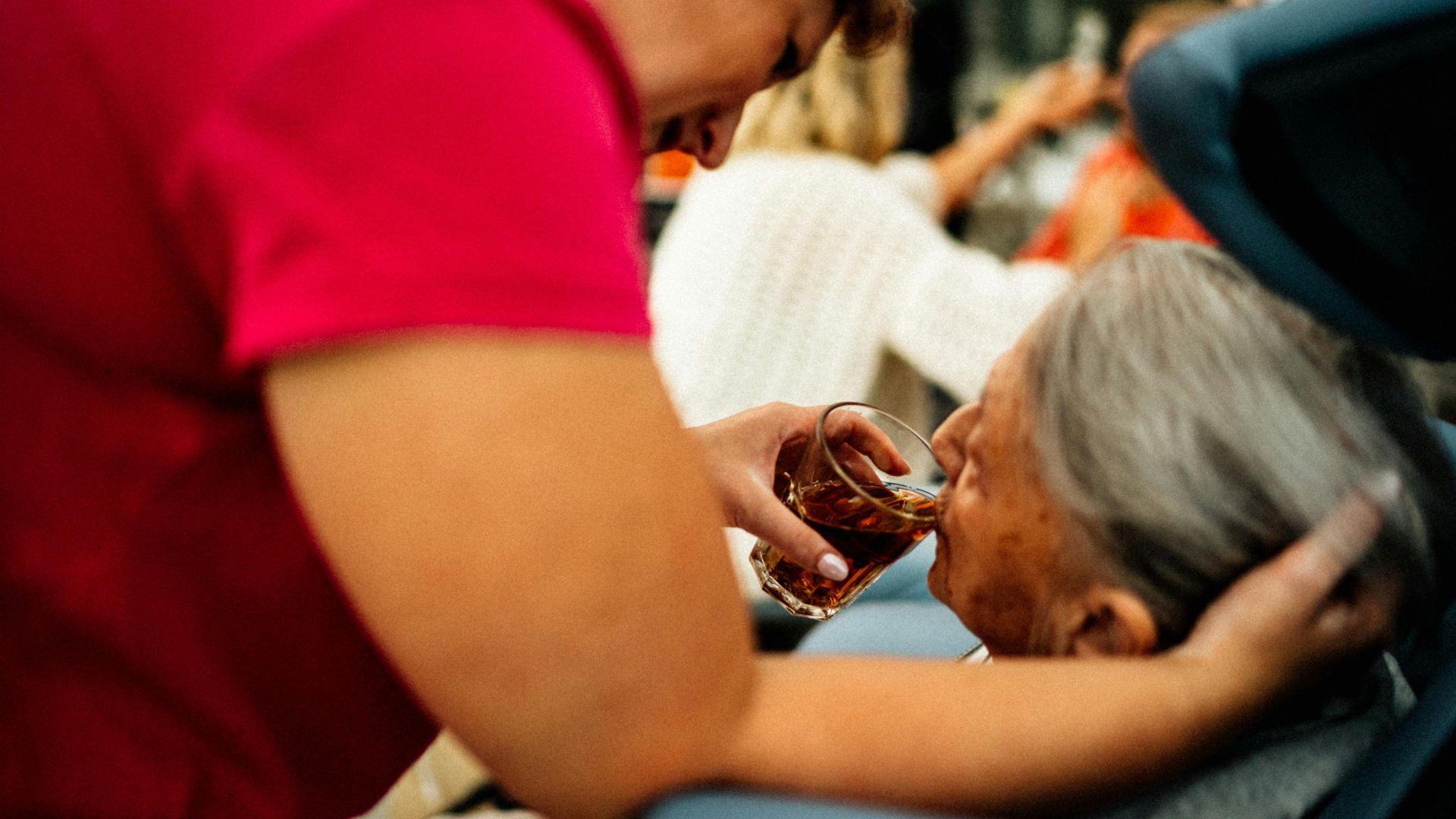
Italy’s care system depends heavily on migrant women, especially from Ukraine, Georgia, and other post-Soviet regions. In 2024, among the nearly 1 million registered domestic workers, 68.9% were foreign-born and 88.3% were women (INPS, 2024). Yet, those numbers only pertain to regularised workers, while domestic work is one of the most irregularised sectors, and the actual number of people employed can be even double. In Italy, home-based elderly caregivers, also known as badanti, come mostly from Eastern Europe and the Middle East (INPS, 2024). Most of the time, this work requires living in the same house as the person being cared for and maintaining almost 24/7 availability. While being essential for the Italian ageing society, this sector remains an invisible grey zone with often irregular employment, resulting in the rights of migrant women employed by Italian families often being violated and ignored.
Although the Italian government has sporadically attempted to regularise the status of these so-called “essential workers” through a quota-based foreign recruitment system or amnesties (the last one, regulated by D.L. n. 34, took place in 2020 to address challenges posed by the pandemic), the problem persists because, as our study shows, legislation alone is not enough.
Irregularity and circle of vulnerability
Irregularity in the migrant domestic work sector manifests along two intertwined dimensions: residency and employment. Many women easily arrive in Italy with tourist visas or biometric passports, even though their intention is to work, and immediately enter the sector without a work permit, thereby overstaying their travel documents.
Even when a residence permit is obtained thanks to amnesties, temporary protection, or even citizenship (e.g., for Polish women after Poland’s EU accession), this does not guarantee access to regular employment. Employment contracts, even when they exist, are often partial —declaring only a few hours of work— while the actual work is full-time and live-in.
As a consequence, in many cases, access to regularisation depends on the employer’s willingness to provide accommodation and a contract, a promise which is often used as an instrument of control and blackmail. This situation forces workers into a continuous informal negotiation of their rights, without a clear legal framework.
Life at risk, behind closed doors
The absence of a valid residence permit results in administrative invisibility, which prevents access to healthcare, welfare, and official registration of residence. Some women return to work immediately after illness or surgery —even after cancer treatments— because they cannot afford to stop and are not eligible for disability pension.
Irregularity creates a complete imbalance in the employer–worker relationship, fostering exploitation, abuse, and subordination. A house becomes a place of exploitation: bedding, food, water, or heating are not guaranteed and depend on the employer’s goodwill.
Live-in work exposes women to a constant invasion of personal and intimate space, often placing them in sexually ambiguous situations involving the elderly men they care for. The female body becomes an object of daily control: clothing, movements, and behaviour. Among 20 women interviewed, almost half reported harassment and sexualised comments, especially the younger ones.
As a result, irregularity creates an implicit social hierarchy where migrant women are perceived as subordinate, compliant, and replaceable. Women from the so-called ex Eastern Bloc, despite their ‘whiteness’, are often perceived as less prestigious domestic workers and less deserving of being regularised in comparison to workers from other origins. One of the participants, a Polish woman, recalls that in the 90s it was impossible to regularise her stay:
“They would say that the Filipinas had to be sorted out, the Sri Lankans, the Indians. At the time, there were Somalis, the San Domingos, Cape Verdeans. But you Polish women, what do you need documents for? I mean, it was a wall.”
In workplaces, they are often assigned extra tasks and treated as inferior, and in the housing market, foreign accents alone can lead to immediate rejection.
Moreover, the conditions that require Italian families to receive essential care are the same ones that make workers vulnerable. Considering that care workers are often older women, withnearly a quarter aged 60 or older (Eurofound, 2020), the system should also take into account their ageing. To cover the needs of the Italian welfare system, these women spend their lives and health caring for others, often without receiving anything in return when they are older.
Regularisation: the key to dignity and fairness in care work
The problem is that the importance of regularisation is often not understood by either workers or employers. Regularity “has a price” that only seems worth paying if it brings tangible advantages. Yet, regularisation is not a personal favour.
To obtain regularisation, women often must negotiate, accept exploitative conditions in exchange for a promised contract, and pay taxes from their own pocket. Women also report that they are forced to accept exchange relationships with Italians or fellow migrants, due to legal requirements that are difficult to meet. The regularisation process requires both a working contract and proof of residence (so-called “ospitalita”), which employers often fail to provide. Therefore, if any of these documents are missing, women are forced to seek alternative solutions elsewhere in order to submit an application.
Addressing the challenges faced by migrant domestic workers and assemblages of irregularities requires action on multiple fronts.
First, a broader cultural shift is needed to recognise and value domestic and care work as essential labour, and to combat the social stigmas often attached to migrant women and irregular work.
Second, simplification of bureaucratic procedures and the elimination of their interdependence are necessary actions that the government must take into account, as the services provided by migrant domestic workers are essential to the country and should be properly rewarded not only financially, but also in terms of respect for human rights and dignity.
Third,it is crucial to actively promote solidarity and mutual support within migrant communities.
We use cookies to help personalise content and provide a better experience. By clicking Accept all, you agree to this, as outlined in our Cookie Policy. To change preferences or withdraw consent, please update your Cookie Preferences.