EU cooperation on asylum policy is notoriously difficult. Political sensitivities often result in protracted policy-making and legislation that is watered down by myriads of derogation possibilities and suffers from implementation gaps at the national...
Displacement caused by climate change is often framed as a looming threat to rich countries — a wave of “climate refugees” crossing borders. But in reality, most people displaced by environmental shocks stay close to home.
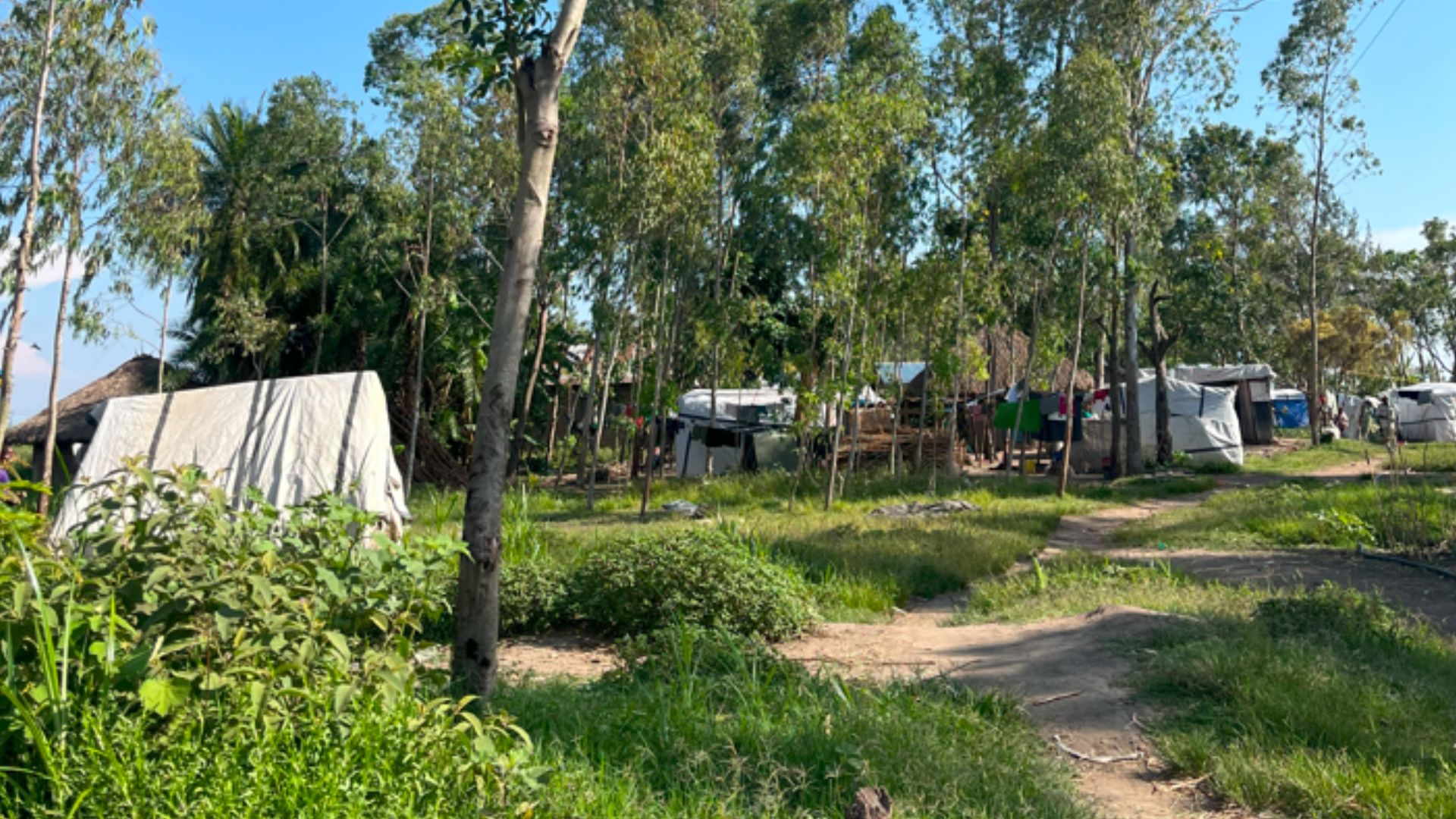
In Western Kenya, thousands have been uprooted by recurrent flooding and lake backflow since 2019. They’ve resettled just a few kilometres from their former villages, in informal camps like Lugombe settlement*. Here, families live in leaking tents on borrowed land, caught between cultural ties to ancestral homes and the growing realisation that the floods aren’t going away.
Based on fieldwork in October 2024, this blog shares what we heard from displaced residents and humanitarian workers—and why these so-called “temporary” displacements are anything but.
An uprooted community on borrowed land
In Lugombe settlement—a small, informal displacement camp in Western Kenya—families have been forced to move just 1 to 4 kilometers from their original homes, fleeing repeated flooding and backflow from Lake Victoria. What were once productive farmlands are now submerged. Since 2019, thousands have been uprooted by heavy rainfall, river flooding, and rising lake levels.
Like other displacement sites near Lake Victoria, Lugombe wasn’t planned or built by the county government or aid agencies. Instead, a private landowner allowed people to settle there in 2019. Others have arrived over the years. Every time there is flooding, the camp acquires new residents.
Because these camps are informal, reliable statistics are scarce. Still, the scale is clear: as of May 2024, the counties of Busia and Kisumu – which border Lake Victoria and have faced repeated flooding – hosted 24 camps like Lugombe according to UNOCHA.
When the water doesn’t wait: Infrastructure, climate, and the limits of control
Flooding nearby Lake Victoria is not a new phenomenon. Older residents in Lugombe told us about the floods in 1905 and the 1960s, which were recalled as rare and extraordinary events—stories passed down over time. But since 2019, flooding has become an almost annual event. In 2020 alone, around 40,000 people in Busia County were displaced. That year’s flood was driven by above-average rainfall and by a failure to release enough water from the lake.
More broadly, changing precipitation patterns associated with climate change intersect with political decisions that regulate the outflow from Lake Victoria, thus, influencing the water balance. A hydrologist that we spoke to explained that while outflow from the lake is regulated to mimic natural patterns (to support hydropower), the system has been overwhelmed by excess rainfall and river inflow since 2019. In Lugombe, residents pointed to broken or incomplete dykes as another cause of flooding. A damaged section of riverbank had turned into a channel, letting lake water rush back into the community and leading to even more displacement—even after the rains had stopped.
The aid arrives—and then disappears
“It’s just at that heat of passion […] but once you end that phase, very quickly, it’s kind of a forgotten story.” Despite rising attention to climate displacement in international and regional political agendas, support for flood-affected communities in Western Kenya is still short-term, reactive, and inadequate. In Lugombe, residents live in decaying tents made of canvas, which leak during storms. Overcrowding is common, with several generations sharing tiny rooms. Food insecurity and limited access to healthcare are urgent concerns. These protracted situations counter the common narrative about flood displacement only being a temporary issue.
One resident put it bluntly:
“We only feel the presence of government when the situation gets worse”.
Meanwhile, a humanitarian worker we spoke to referred to this displacement as a “forgotten humanitarian crisis” and described how, despite recurring floods, many aid organisations are not even aware of the existence of camps at the edge of Lake Victoria. A Red Cross official described how the support spiked during the 2019 and 2020 floods, but faded just as quickly.
When staying feels like leaving everything—and leaving feels like betrayal
As we walked through Lugombe with the community leaders who showed us around the camp, we were reminded that the flooded areas are not just homes, but ancestral grounds. Due to cultural ties, many families are reluctant to leave the settlement, despite little hope of being able to return to their inundated homes. “For us as a community we cherish our land,” one elder told us. “To leave behind our forefathers would not be justice”.
Some residents are still waiting and hoping for the waters to recede. One man described how he had in fact returned home once, only to be displaced again after new floods. Others believe that it is time to move further inland.
But all agreed on one thing: the need for durable solutions. “We are tired of blankets and relief food,” one resident said. “We need a permanent solution.”
The protracted displacement around Lake Victoria challenges dominant narratives that focus on climate-induced “mass migrations” across borders. It highlights the everyday realities of internal displacement—driven not just by climate, but by political, and institutional dynamics.
And it asks the hard question:
When does a temporary crisis become permanent—and who is responsible for fixing it?
*Lugombe settlement is a pseudonym
__
Nora Söderberg is a PhD candidate at the Department of Political and Social Sciences of the European University Institute, focusing on migration politics and environmental governance.
Otwori Dennis is a researcher in Disaster Management and Sustainable Development at Masinde Muliro University of Science and Technology (MMUST) in Kenya, with over a decade of experience in teaching, research, and consultancy.
We use cookies to help personalise content and provide a better experience. By clicking Accept all, you agree to this, as outlined in our Cookie Policy. To change preferences or withdraw consent, please update your Cookie Preferences.